
What a Managed Staffing Solution Actually Looks Like Inside a Nursing Home

What Changes the First Day, First Week, and First Month After You Centralize If you run staffing for a nursing home, you already know the math doesn’t work: six agencies, six phone numbers, and zero guarantee anyone shows up for the 6-to-2 shift. A facility does not run on strategy decks. It runs on whether […]
What “Vendor-Neutral” Actually Means for Facilities Managing Multiple Staffing Agencies

How consistent standards, transparent performance data, and broader access to talent help facilities fill shifts more reliably When multiple staffing agencies support the same facility, coordinating them can quickly become complicated. Each agency has its own recruiters, worker pool, processes, communication methods, and performance history. Without one centralized system, it can be difficult for facility […]
How Manufacturing Teams Use Workforce Data to Reduce No-Shows Before They Disrupt Production

When an operator fails to arrive for the morning shift, the effects can spread quickly. A supervisor starts making calls, other employees are asked to cover, overtime increases, and production may slow while the plant searches for a replacement. Although every absence cannot be predicted or prevented, attendance data can reveal patterns that help manufacturing […]
Why Managing Multiple Staffing Agencies Is Costing You More Than One Good Platform

Simplifying Staffing Starts with Reliable Workforce Coverage When a shift goes unfilled in long-term care, the impact extends far beyond the schedule. Residents notice when familiar caregivers are unavailable. Families notice when response times increase. Care teams feel the pressure when staffing gaps require them to take on additional responsibilities.In long-term care, staffing challenges affect […]
Why Managing Multiple Staffing Agencies Costs Manufactures More
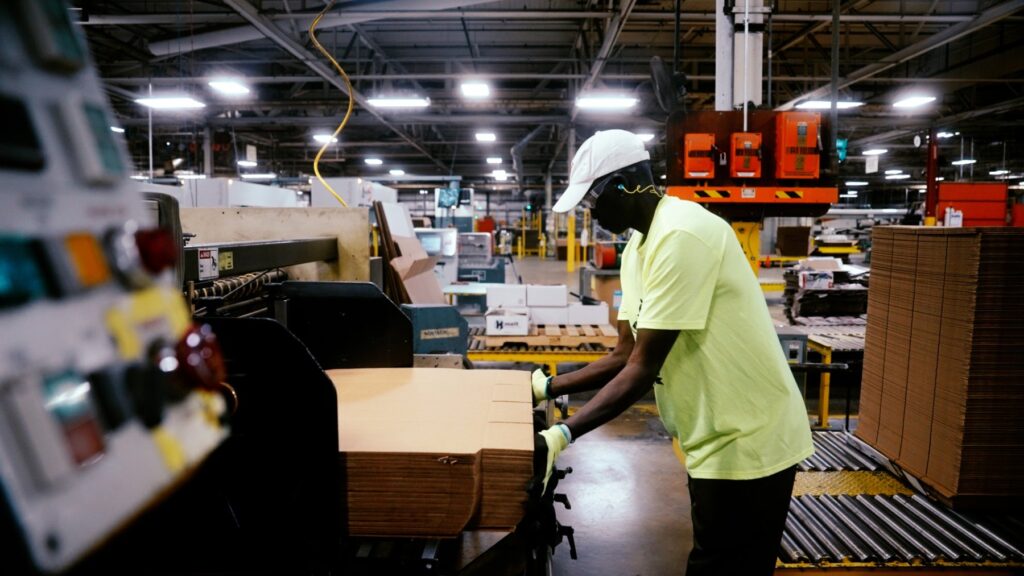
When Less Is Actually More. In the world of manufacturing, every disruption affects output. That’s why manufacturers monitor equipment uptime, track productive metrics, and optimize supply chains. Yet many still rely on a patchwork approach to temporary labor, managing multiple staffing agencies instead of one connected system. Access to reliable, qualified talent remains one of […]
The Talent Pipeline Hidden in Your Temp Workforce

Why Your Best Permanent Hires Might Already Be on Shift Most leadership teams think of temporary labor as a short-term fix: someone calls out, a production line speeds up, census jumps unexpectedly, and a temp worker fills the gap until things settle down. Getting that gap filled quickly, with someone qualified, is the baseline expectation. […]
The Manufacturing HR Director’s Guide to Workforce Stability

Less scrambling. More workforce stability. If you’re feeling buried trying to manage multiple staffing agencies, you’re not alone. A lot of manufacturing HR leaders are stuck in the same cycle. One agency sends strong workers until shift fulfillment suddenly becomes inconsistent. Another fills positions quickly, but turnover spikes within days. Supervisors lose confidence in temporary […]
Why Manufacturing Companies Are Moving Away from Traditional Staffing Agencies

The Shift from Filling Jobs to Stabilizing Operations For decades, when manufacturers faced labor shortages, the solution was traditional staffing agencies. When production demand increased, attendance dropped, or turnover spiked, the answer was simple: call a temp agency. Today, however, manufacturers need more than access to workers. They need access to reliable, qualified talent that […]
The Real Cost of a No-Show on the Production Floor
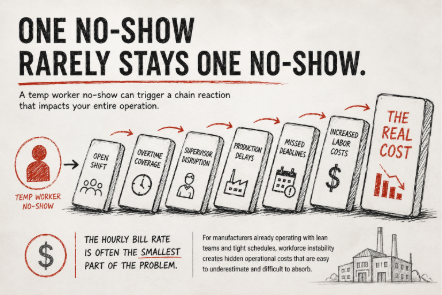
Beyond the Bottom Line Manufacturing leaders have spent the last several years learning to operate under constant labor pressure. Teams are leaner. Production schedules are tighter. And many facilities now rely on temporary labor to help maintain output when demand changes or staffing gaps emerge. But what happens when that temporary labor does not show? […]